Pro SWPPP – America’s #1 SWPPP Service sees the same problem every day: construction projects get shut down because someone missed one simple form or one piece of paperwork. The fines are huge. The delays cost more. And most people don’t even know what they need until it’s too late.
Here’s the truth: if you’re moving dirt on more than one acre in California, you need a plan. And you probably need a permit. But which one? A SWPPP? An NOI? Both?
This guide will explain exactly what you need based on your California project and how Pro SWPPP makes it simple so you don’t waste time or money.
What Is a SWPPP?
A Stormwater Pollution Prevention Plan – or SWPPP – is a written document that shows how you will stop dirt, chemicals, and trash from washing off your construction site into streams, rivers, and the ocean.
Think of it like a playbook. It tells everyone on your site what to do, where to put the silt fences, how often to inspect things, and what to do when something goes wrong.
The federal Clean Water Act says if you disturb more than one acre of land, you must have a SWPPP. California follows that law through the National Pollutant Discharge Elimination System, or NPDES. The state calls it the Construction General Permit, or CGP.
So if you’re grading a lot, building a neighborhood, or putting in a parking lot, you need a SWPPP.
What Is an NOI?
An NOI stands for Notice of Intent. It’s a form you file with the state that says, “Hey, I’m starting a construction project, and I have a SWPPP ready.”
You can’t legally start moving dirt until your NOI is filed and approved. The state needs to know you exist and that you have a plan to protect water quality.
In California, you file your NOI through the State Water Resources Control Board’s online system called SMARTS. You upload your SWPPP, pay a fee, and wait for your WDID number – that’s your permit number.
No NOI? No permit. No permit? You can’t start work.
Do You Need Both?
Yes. If you’re disturbing more than one acre in California, you need both a SWPPP and an NOI.
The SWPPP is the plan. The NOI is the form that registers your plan with the state. You can’t file an NOI without a SWPPP, and you can’t legally work without filing the NOI.
Here’s the simple rule: one acre or more = SWPPP + NOI.
Even if your site is smaller but it’s part of a bigger development plan, you still need both. California doesn’t care if your parcel is only half an acre if the whole project is three acres.
Don’t want to mess with all the paperwork and requirements? Check out Order your SWPPP now with Pro SWPPP Professional CPESC Certified SWPPP Services.
What Goes in a California SWPPP?
Your SWPPP must include specific things to pass state review. Pro SWPPP builds every plan with these required sections:
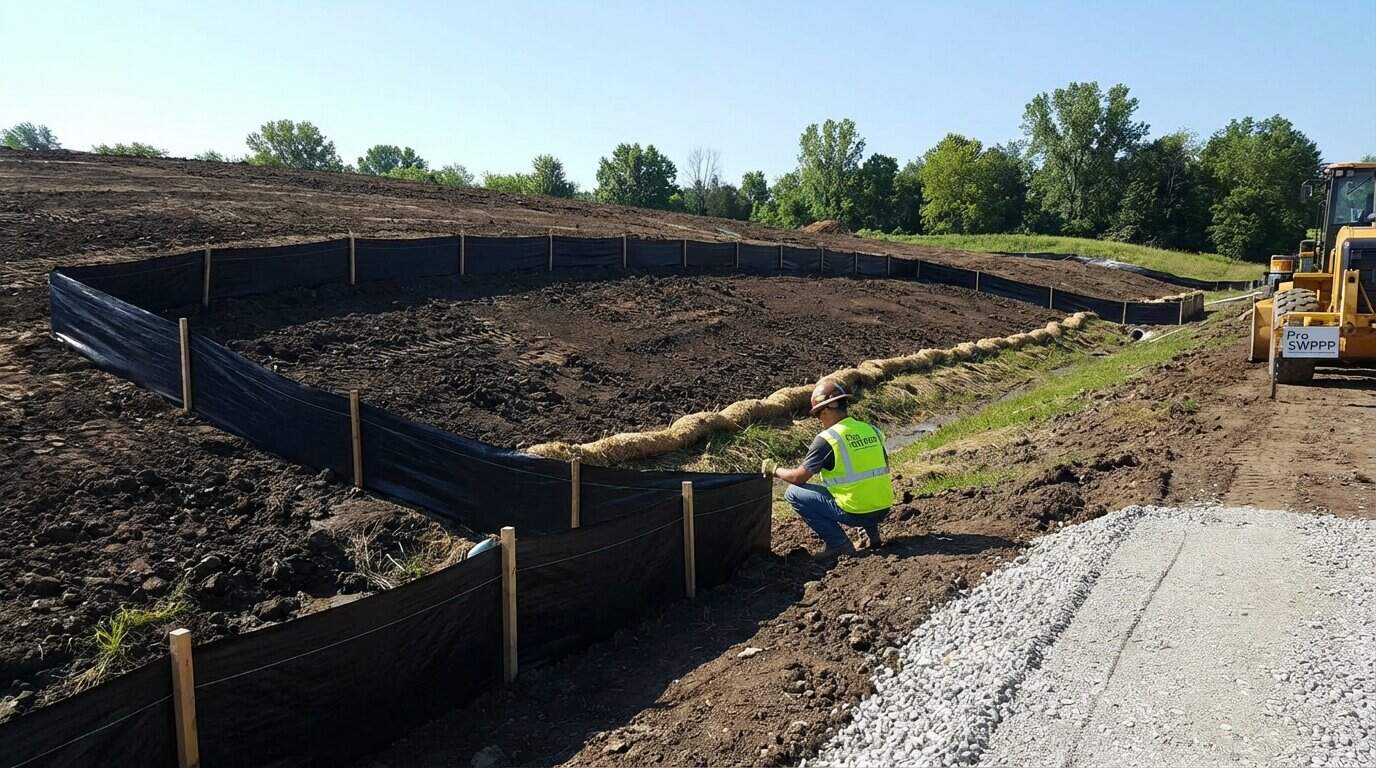
- Site map: Shows where dirt will be moved, where water flows, and where you’ll put controls like silt fences and sediment basins.
- Erosion control measures: Things like straw mulch, hydroseed, and erosion control blankets that stop soil from washing away.
- Sediment control measures: Silt fences, sediment traps, and check dams that catch dirt before it leaves your site.
- Best Management Practices (BMPs): How you’ll store materials, manage waste, and prevent spills.
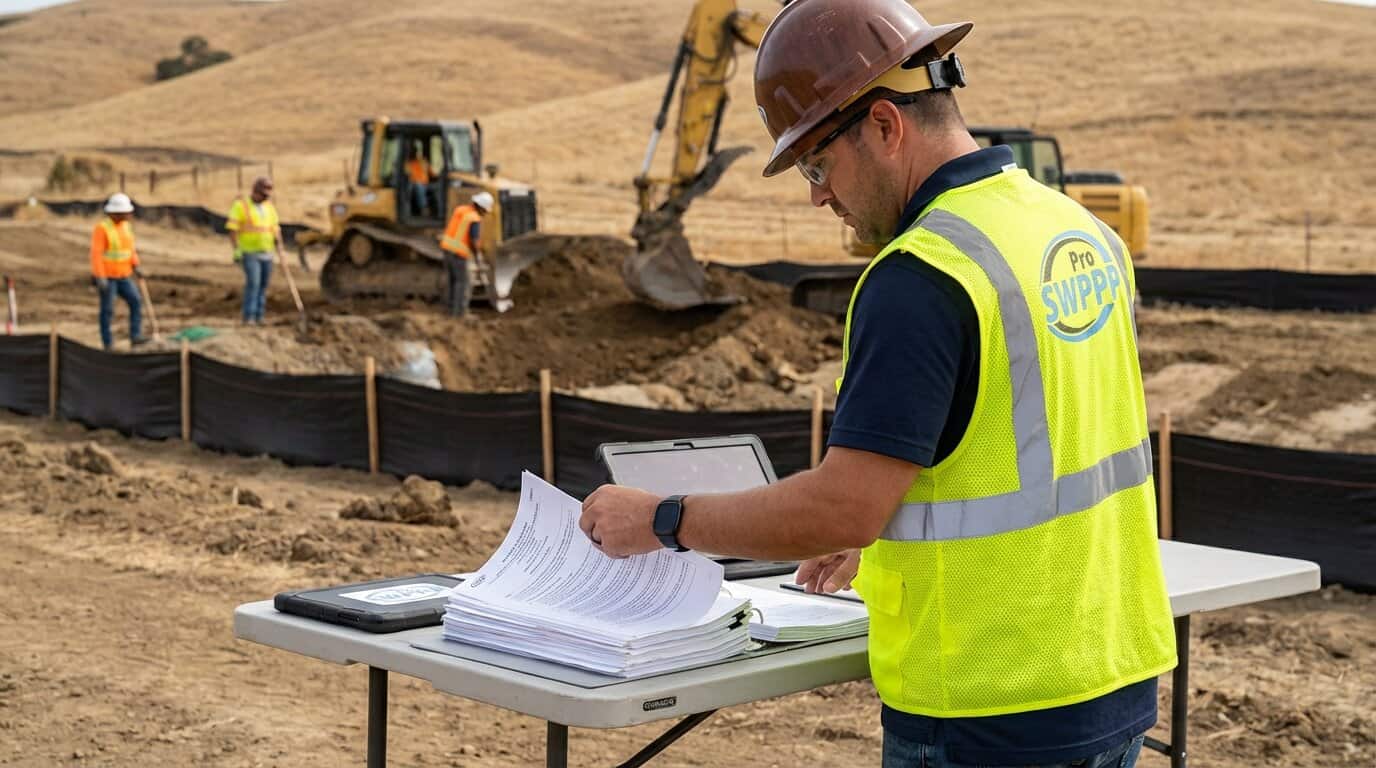
- Inspection schedule: Who inspects, how often, and what they look for.
- Rain event action plan: What happens before, during, and after storms.
- Training records: Proof that your crew knows the plan.
California also requires a site-specific risk assessment. You can’t use a generic template. Every site is different – different soil, different slope, different weather.
That’s why Pro SWPPP – America’s #1 SWPPP Service custom-builds every plan. No copy-paste. No shortcuts. Just real plans that pass inspection.
California vs. Other States
Every state runs its own version of the NPDES program. Some are stricter than others.
In Texas, the Texas Commission on Environmental Quality (TCEQ) requires an NOI at least 48 hours before you start work. Rain event inspections must happen within 24 hours after a storm that drops half an inch or more.
In Georgia, projects over 150 acres need bigger sediment basins and more frequent inspections by a licensed design professional. Georgia’s permits run through 2028 and require post-construction BMPs that remove 80% of Total Suspended Solids.
California sits in the middle. The state requires weekly inspections and inspections within 24 hours of any rain event that causes runoff. You must keep your SWPPP on site at all times. Inspectors can show up anytime and ask to see it.
Common Mistakes That Cost You Money
Most violations happen because of five mistakes:
1. Using a generic template. California reviewers can spot a copy-paste plan instantly. They’ll reject it, you’ll lose weeks, and your project sits idle.
2. Skipping inspections. Weekly inspections are not optional. Miss one, get caught, and you’re looking at fines starting at $10,000 per day.
3. Poor BMP maintenance. Silt fences full of mud don’t work. Sediment traps that overflow don’t work. If your controls fail, you’re liable.
4. Late NOI filing. If you start work before your NOI is approved, the state can issue a stop-work order and fine you for every day you operated without coverage.
5. No updates. Your SWPPP is a living document. If your site changes, your plan must change. New phases, new BMPs, new inspectors – all must be documented.
Pro SWPPP handles all of this for you. Our CPESC-certified professionals know California rules inside and out. We write compliant plans, file your NOI, track inspections, and update your SWPPP as your project evolves.
Why Pro SWPPP Is Your Best Choice for California Projects
You have three options when it comes to stormwater compliance:
Option 1: Do it yourself. You can download templates, read 200 pages of state guidance, fill out forms, and hope you got it right. Most DIY plans get rejected. Most people give up halfway through.
Option 2: Hire a local consultant. They might know the rules. They might not. You’ll pay by the hour and hope they don’t disappear when inspection season starts.
Option 3: Hire Pro SWPPP – America’s #1 SWPPP Service. You get a CPESC-certified expert, a custom plan built for your exact site, NOI filing included, and ongoing support through project completion. Flat-rate pricing. No surprises.
We’ve completed thousands of plans across California. We know the state reviewers. We know what they look for. And we get approvals fast because we do it right the first time.
Not sure what your project needs? Take our SWPPP Quiz (link) or Schedule a Free SWPPP Consultation with CPESC Certified SWPPP Expert Derek E. Chinners.
What Happens If You Skip It?
Fines start at $10,000 per day for operating without a permit. Serious violations can hit $25,000 per day or more.
But money isn’t the only cost. Stop-work orders shut down your entire crew. Delays push your schedule back weeks or months. Subcontractors move to other jobs. Financing gets more expensive.
And if sediment leaves your site and damages a stream or wetland, you could face criminal charges and habitat restoration costs that run into six figures.
California takes Clean Water Act enforcement seriously. The state has inspectors in the field every day. They check job sites, review records, and issue citations on the spot.
The smartest move? Get compliant before you break ground.
How Pro SWPPP Works
We make California SWPPP compliance simple:
Step 1: You fill out a quick project questionnaire or call us at our contact page.
Step 2: We assign a CPESC-certified professional to your project. They review your site plans, soils report, and grading plan.
Step 3: We write your custom SWPPP and file your NOI through SMARTS.
Step 4: You get your WDID number and permit coverage. You can start work legally.
Step 5: We provide ongoing support – inspection templates, BMP guidance, plan updates, and help with state audits.
Everything is handled by real professionals who know California regulations. No offshore call centers. No automated templates. Just fast, reliable, compliant plans.
FAQ
How long does it take to get an NOI approved in California?
Once you submit your NOI and SWPPP through SMARTS, the state typically issues your WDID number within 24 to 48 hours if the plan is complete and accurate. Incomplete plans can take weeks to correct and resubmit.
Can I start work while waiting for my NOI approval?
No. You must have an approved WDID number before any earth-disturbing activities begin. Starting work early is a violation that can result in fines and stop-work orders.
Do I need a SWPPP for a small project under one acre?
It depends. If your site is part of a larger common plan of development that totals more than one acre, you need a SWPPP and NOI even if your individual lot is smaller. Check with a CPESC professional to be sure.
Who can write a SWPPP in California?
Anyone can write a SWPPP, but only a qualified professional – ideally CPESC-certified – should prepare one. The state expects plans to meet technical standards for erosion control, hydrology, and Best Management Practices.
How often do I need to inspect my site?
California requires inspections at least once every seven days and within 24 hours of any rain event that produces runoff. You must document every inspection in your SWPPP records.
What is a CPESC certification?
CPESC stands for Certified Professional in Erosion and Sediment Control. It’s a national credential that proves expertise in stormwater management and erosion control. Pro SWPPP employs only CPESC-certified professionals to ensure top-quality plans.
Can Pro SWPPP help with projects outside California?
Yes. Pro SWPPP – America’s #1 SWPPP Service provides compliant plans in all 50 states. Learn more at our about page.
Pro SWPPP – America’s #1 SWPPP Service – makes California stormwater compliance fast, affordable, and stress-free. Get your plan done right the first time at https://proswppp-bpna.wp1.host.